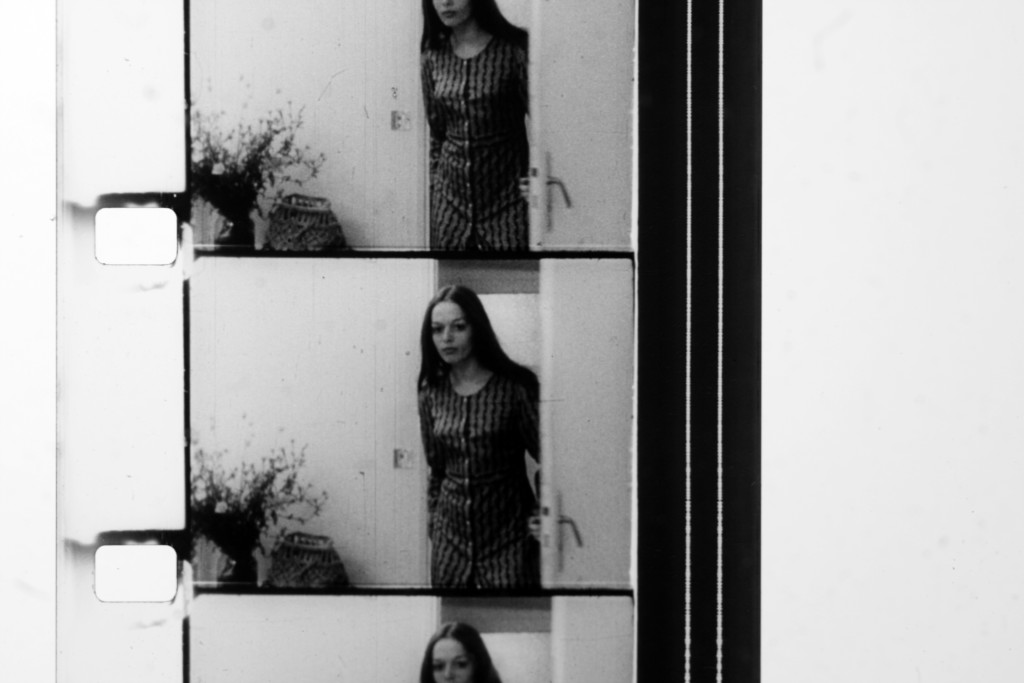
L’enfant aimé ou Je joue à être une femme mariée is an unfinished film by Chantal Akerman.
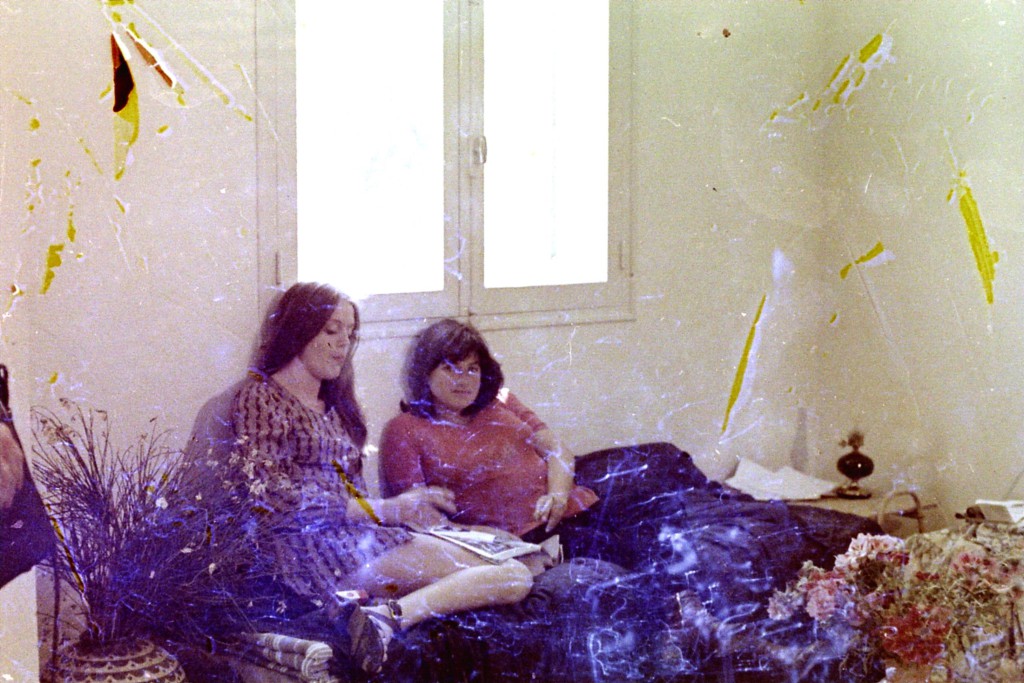
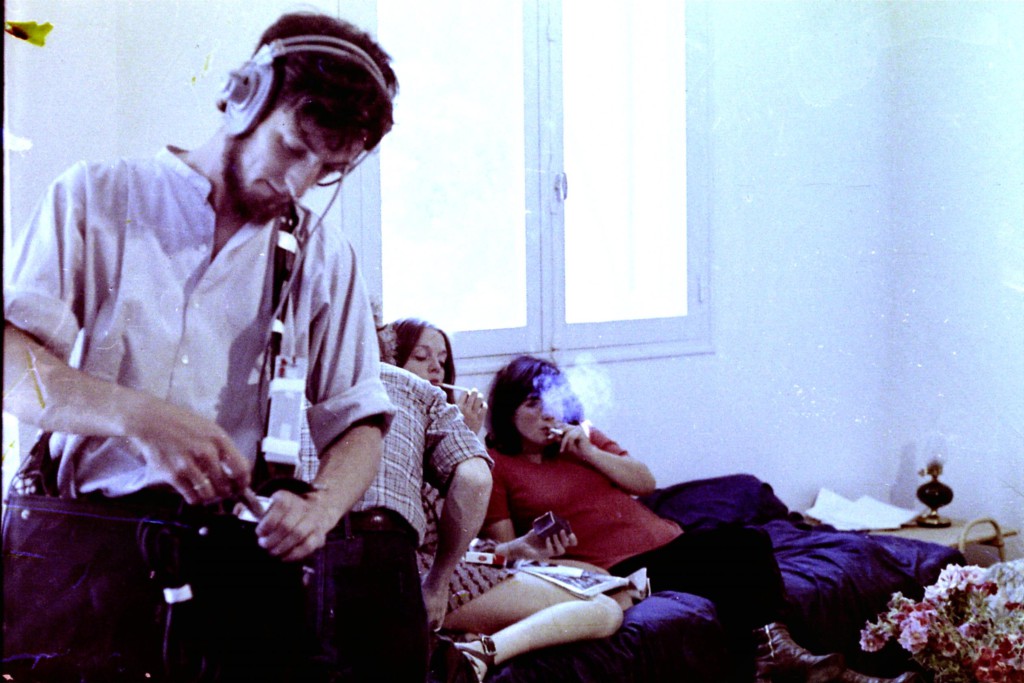
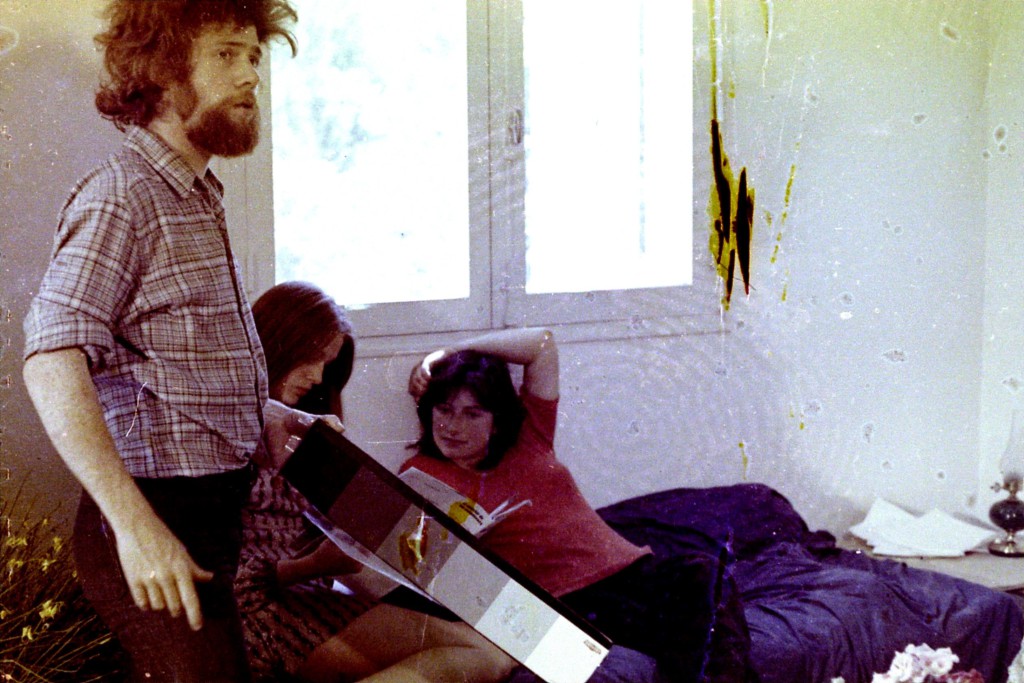
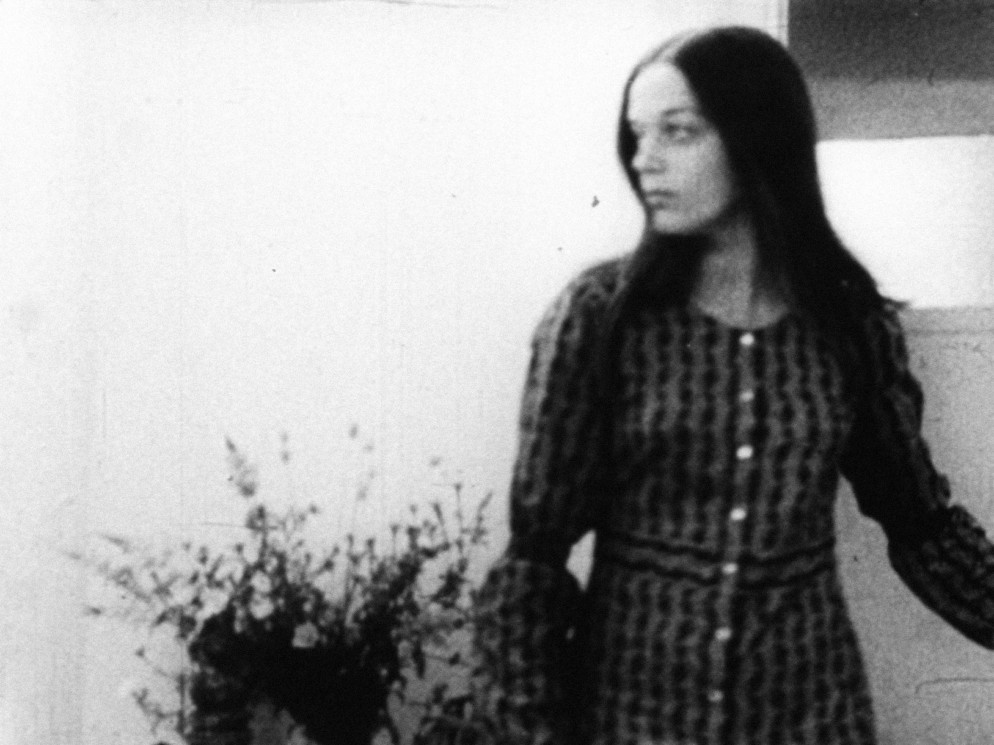
Originally the film was going to be about “the story of a little girl, one afternoon, who heard her parents making love in the room next door. Her mother then asks her to bring them some orange juice, and she brought two glasses to her parents, to which she added some poison” (Chantal Akerman, in an interview with Jacques De Decker, 1981). She deposited the idea to the ministry, that got accepted by the selection committee but rejected by the minister. So she changed the script and made L’Enfant aimé ou je joue à être une femme mariée, with her own resources. Akerman thus went in a villa in Hyères (near Toulon, France), in June 1971, with only a small team, constituted of Claire Wauthion (Je tu il elle), Daphna Merzer (the daughter of Akerman’s mother Natalia’s cousin, the writer Esther Orner), as well as Eric de Kuyper, and his partner Emile Poppe, and an unnamed cameraman.
The film is often forgotten or very seldomly mentioned in her oeuvre and was even considered lost by some. Akerman regarded her own film as a failure. “It’s a movie that never satisfied me. I was applying some very abstract ideas about rejecting editing as a means of manipulating the viewer, without taking into account the fact that, whilst opting for the sequence shot is very effective, this kind of shot requires a great deal of preparation and precise timing. As for me, I had simply let things take their course, and nothing had come of it. I had got to the point where I was wondering if I had gone down the wrong path, if Saute ma ville hadn’t been just a stroke of luck, nothing more…. ” (Chantal Akerman, interview with Jacques De Decker).
As in Saute ma ville, Akerman is on screen, putting herself in front of the camera. Here, she is a silent observer, companion, to the young mother and her child. Adam Roberts considers her a “curious presence : not participating in the scene, but nonetheless there before us. Akerman’s presence changes the nature of the gaze, dislocating the metaphysics and politics of looking. She is not in every shot, but she is so often there that even when she is not there, she is there by implication.” (Adam Roberts, “In Defence of Akerman’s L’Enfant Aimé”). He also sees her as the catalyst for the young mother to talk about herself, motherhood, marriage, … as opposed to when the mother is alone, only doing tasks and taking care of her child. Muriel Andrin sees her as “a witness, distanced but privileged, to the existence of the mother and her bond with the child” (Muriel Andrin, “L’Enfant aimé ou Je joue à être une femme mariée”).
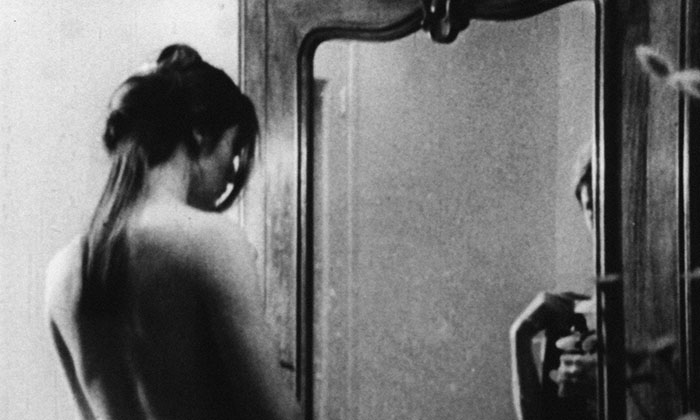
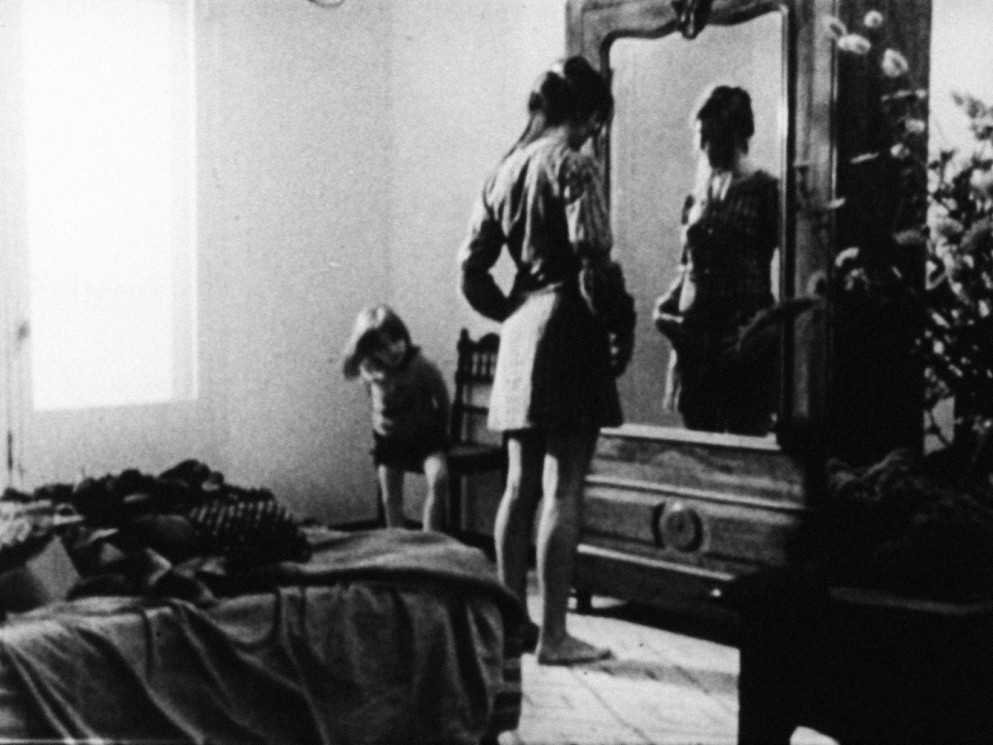
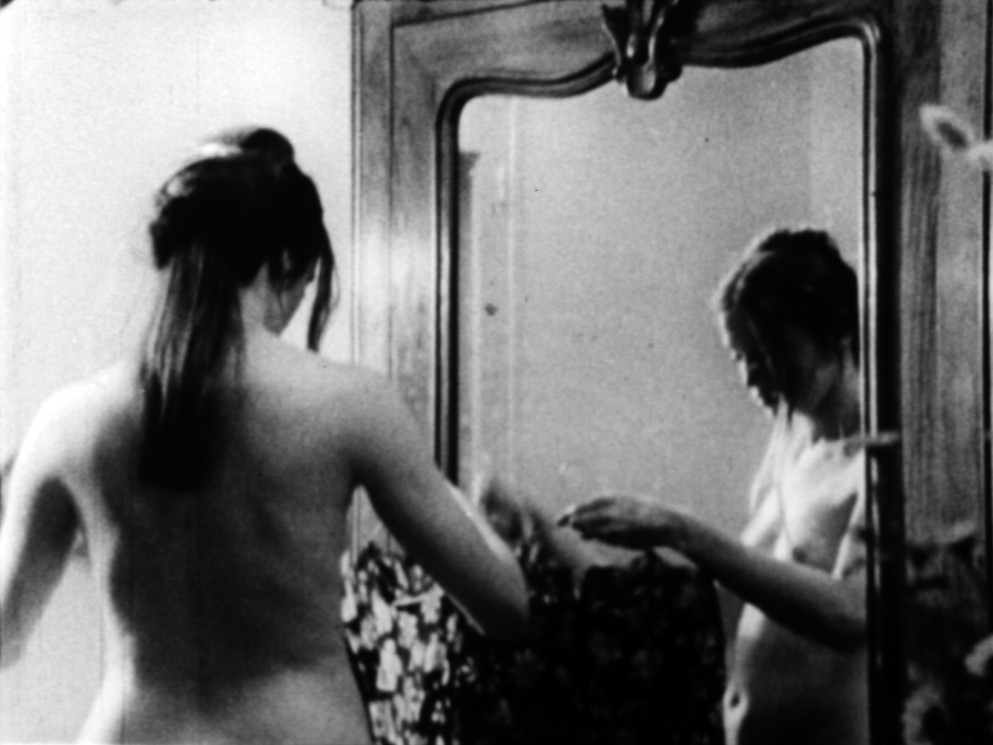
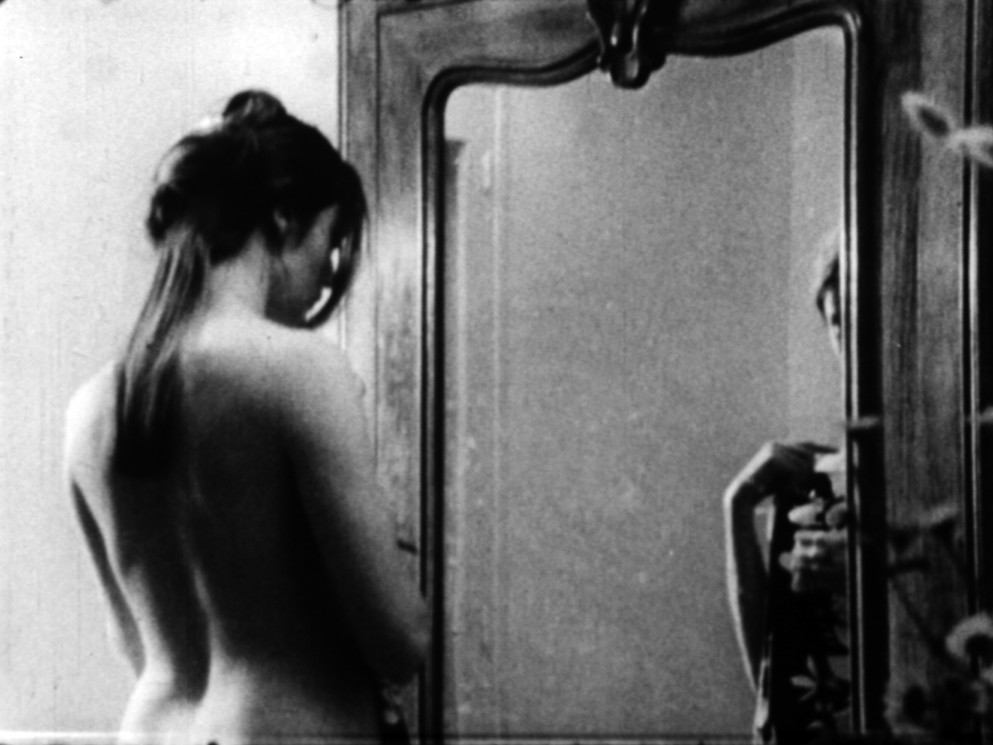
The main theme running through the film are the representations of femininity. The movie oscillates between a maternal representation of femininity, with the young mother taking care of her child, taking care of the house, but also a non-maternal femininity, when the mother watches herself in the mirror, or tries on clothes, reminiscing of a young adolescent playing pretend. For Muriel Andrin, this is a pivotal part of the film : “the construction of identity is essential to the film’s portrayal of the character – not the child, but the mother”. (Muriel Andrin, ibid).
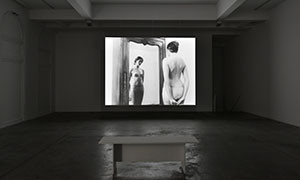
Starting in the 1990s, Akerman began to create installations, mostly based on her previous films. In her 2007 installation In the Mirror she uses a scene from L’Enfant aimé ou je joue à être une femme mariée. Indeed, this installation is an almost 5 minutes loop, displaying the scene where the mother – Claire Wauthion – observes herself half-naked in the mirror and describes her body, in a way almost reminiscing of an autopsy. You can find more about it, on the page dedicated to the installation.
Bibliogrpahy
ANDRIN, M., “L’Enfant aimé ou Je joue à être une femme mariée », in AKERMAN, C., PAQUOT, C., Chantal Akerman -Autoportrait en cinéaste, Cahiers du Cinéma – Centre Pompidou, Paris, 2004, p.173.
BEGHIN, C., AKERMAN, C., Oeuvre écrite et parlée 1968-2015, L’Arachnéen, Paris, 2024.
DE DECKER, J., « Chantal Akerman : Je voudrais que mes films ne plaisent plus seulement aux critiques et aux cinéphiles », Le Soir, 14 janvier 1981.
DE KUYPER, E., VAN DEN OEVER, A., “Temps mort : Speaking about Chantal Akerman (1950-2015)”, Necsus, 2015.
LEHMAN, B., “Silences et cris de Chantal Anne Akerman », Clés pour le spectacle n°33, mai 1973, p.14.
ROBERTS, A., “In Defence of Akerman’s L’Enfant Aimé”, ICA 27, novembre 2013