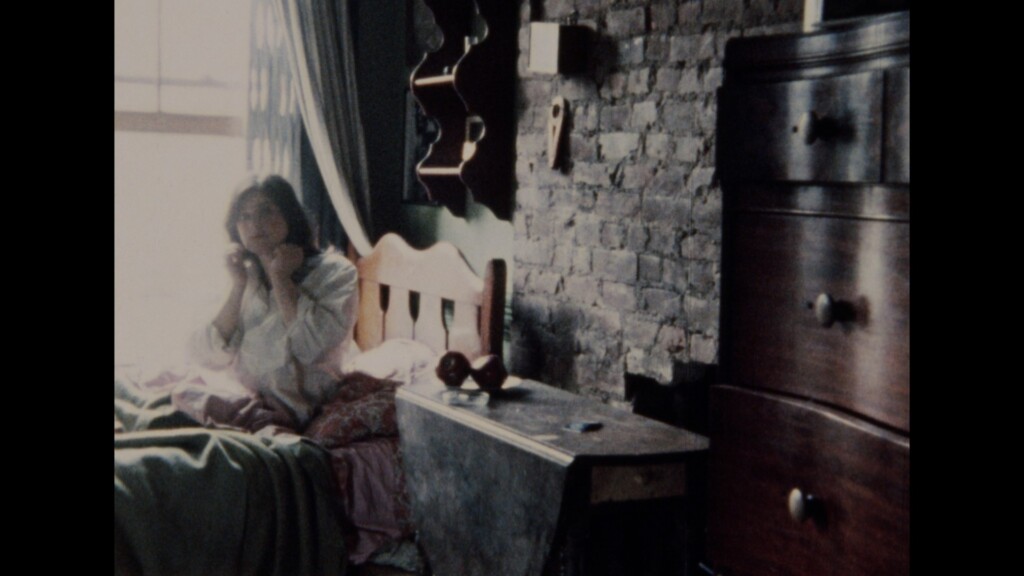
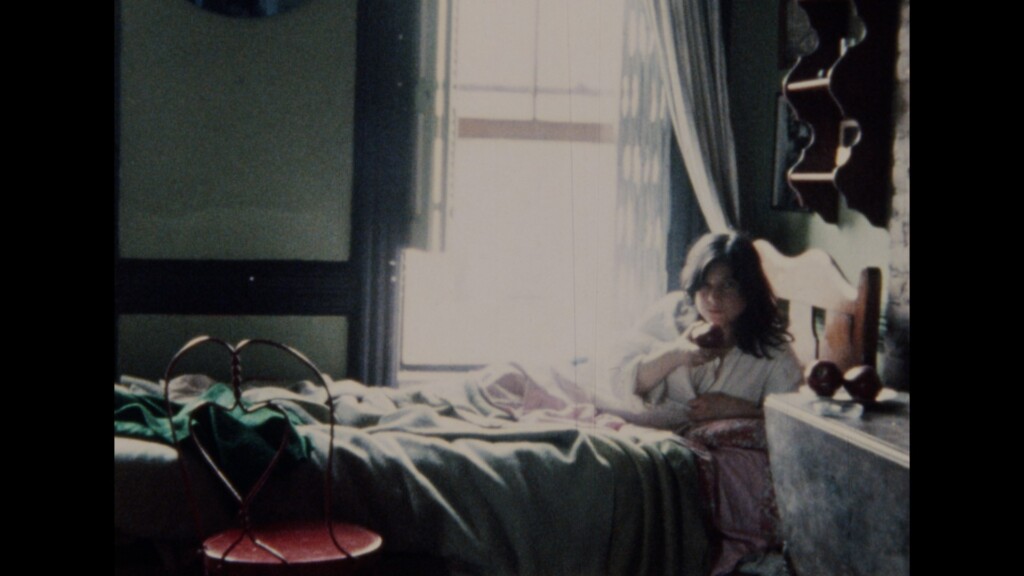
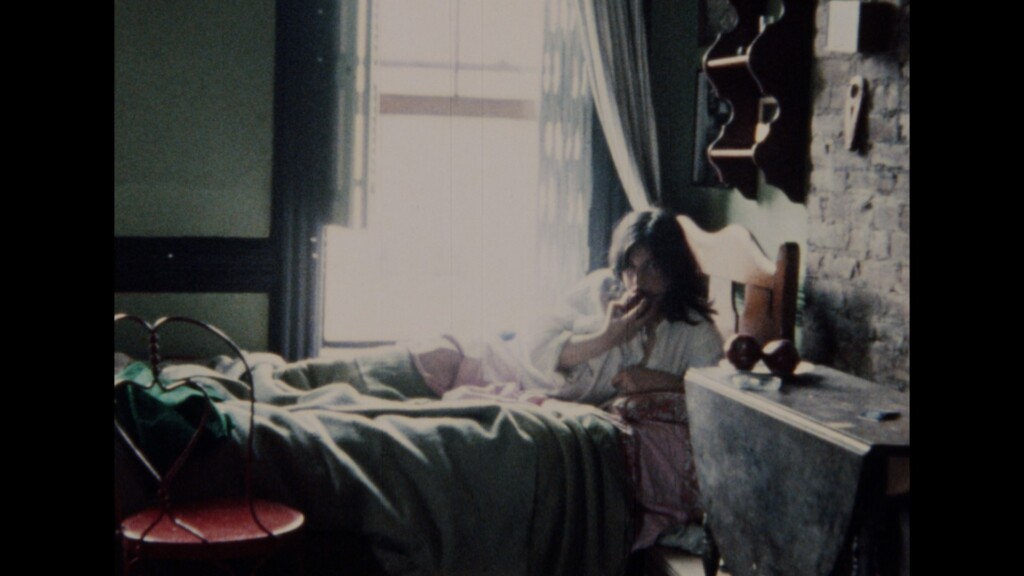
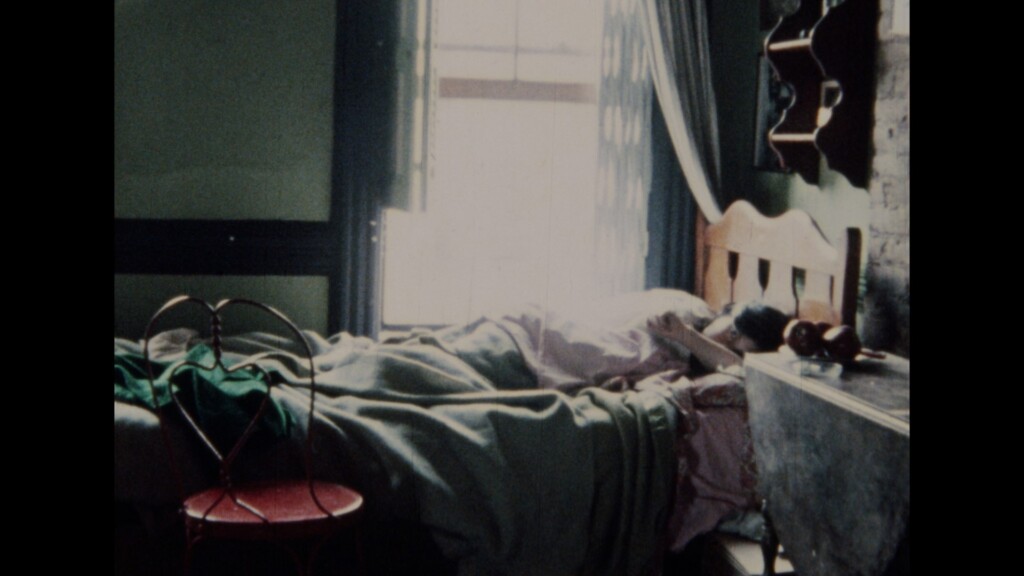
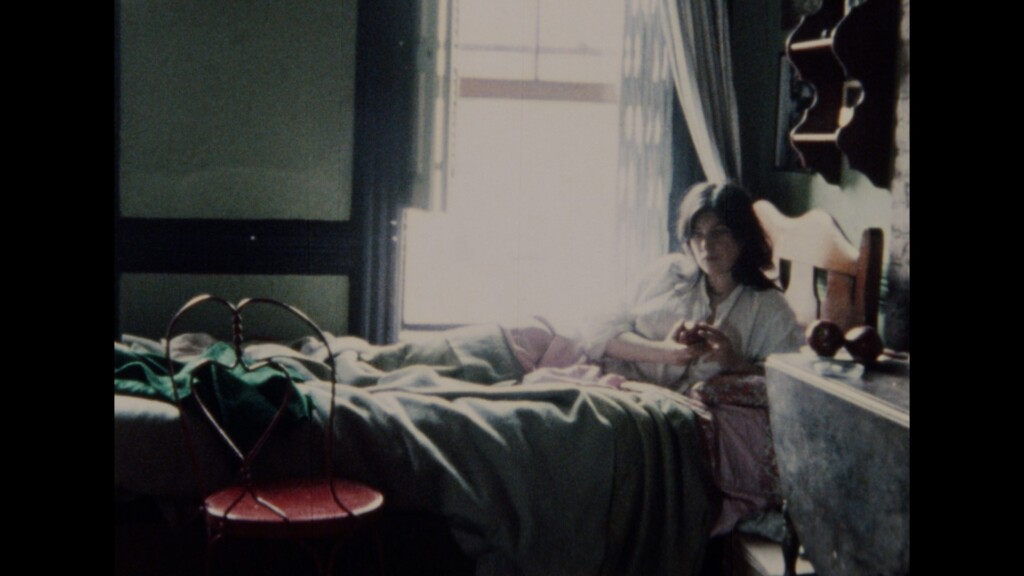
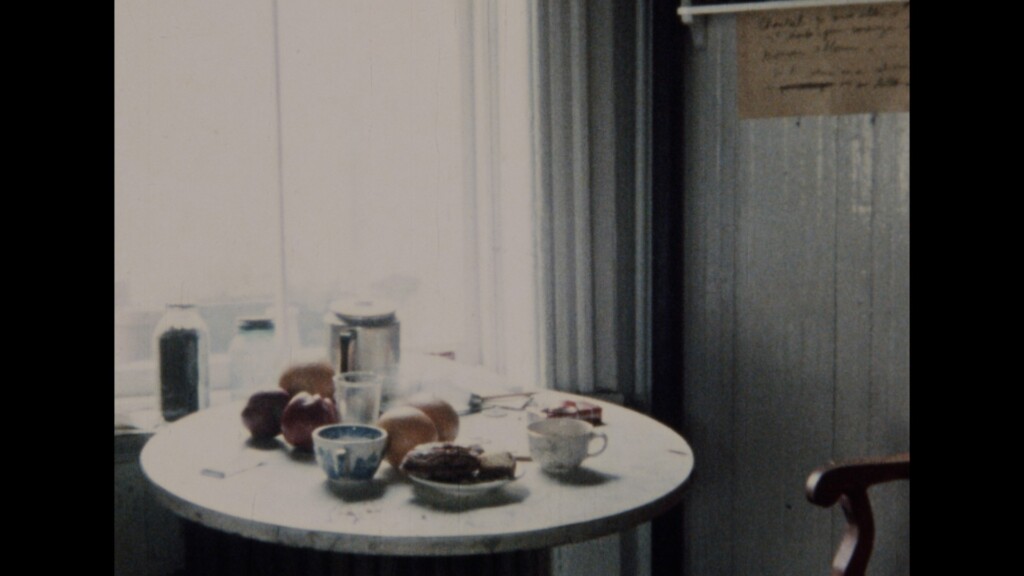
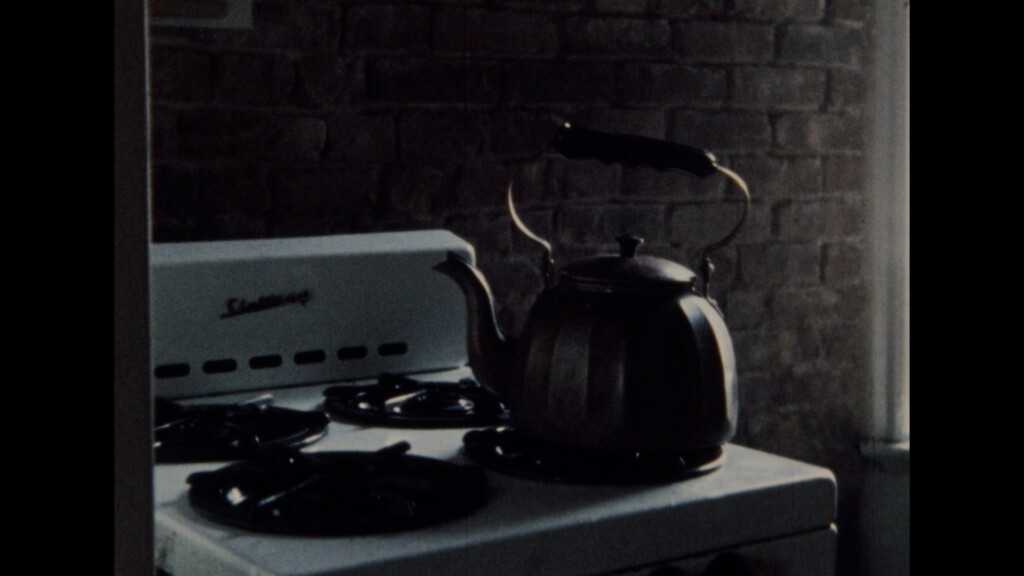
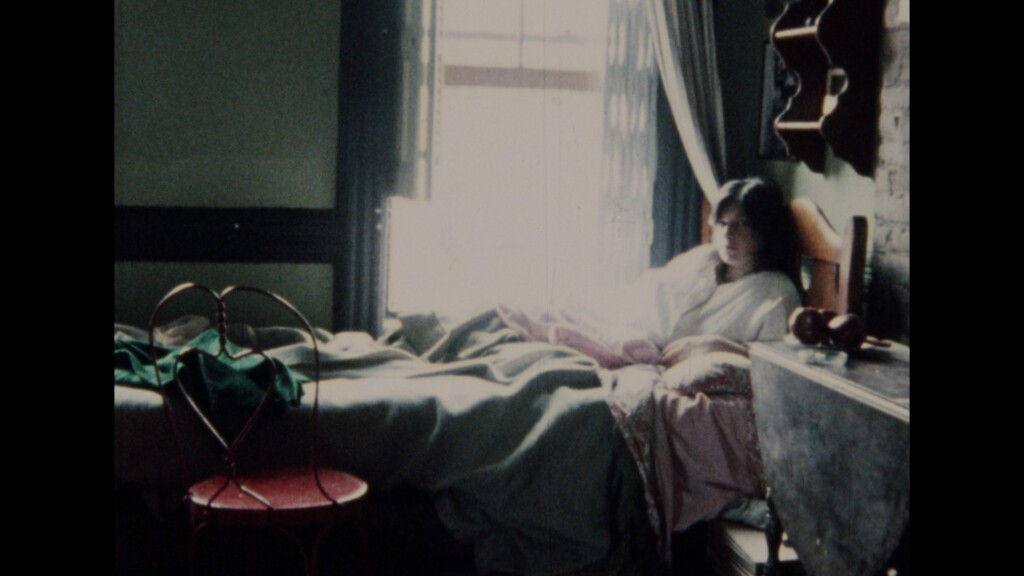
La Chambre is heavily influenced by Akerman’s life in New York in the 1970s. It’s there that she met cinematographer, director and photographer Babette Mangolte, that would later become one of her long-time collaborators. As they both were interested in the American experimental cinema, they attended a special screening of Michael Snow’s La Région Centrale (1971) at the Elgin Theatre (now the Joyce Theatre), that showed the 3 hours film in a loop. Deeply impacted by this experience, Akerman and Mangolte decided to shoot their own film, focusing on continuous movement of the camera in a single space. “The camera only makes one turning movement, repeated multiple times, then all of a sudden, changes ways. The impact, in the spectator’s brain, comes from that rupture with a rhythm they thought unchangeable” (Chantal Akeman in an interview with Jacques De Decker).
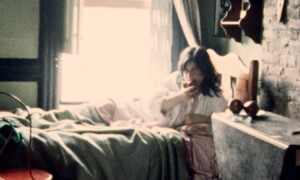
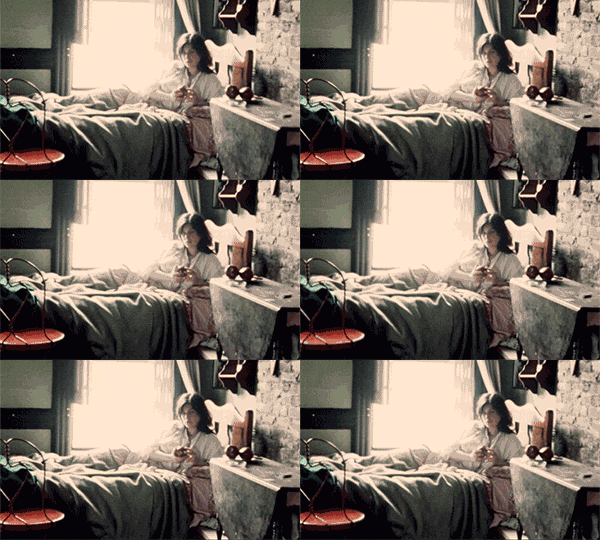
The film was either shot in winter or right after Hotel Monterey in May, according either to Mangolte or Akerman respectively. They choose Akerman’s room at the time, on Spring Street, as their filming location. “The morning of the shoot, I spend an hour rehearsing my pan shot that consists in walking around the camera on its tripod. I want to achieve a continuous movement and a smooth one. I realise that a full tour of the room takes around four minutes in real time, so I can do three full tours during the eleven minutes available on a battery pack. Meanwhile, Chantal thinks of what to do. There is a bed in the room. She will be in the bed and at each pass, she will change position and will do something different” (Babette Mangolte in Autoportrait).
“Today the film reads less as an homage to Michael Snow than like a metaphor about the sensual power of what is hidden. The movements of Chantal, who is in the bed under the covers, are captured without being completely revealed. Chantal became an actress. The movie exists as a film because of the power of suggestion of the actress with ambiguous movements. The film is radiant with simplicity. (…) the mechanism of the movement at constant speed is not synchronised with the movements. This sense of voyeuristic chance contributes to the hypnotic power and sensual allure of these gestures”. (Babette Mangolte in Autoportrait).
The film is shot as a silent film, because, according to Mangolte, it was the norm at the time in the experimental film scene. They did two takes in two hours. When Akerman went back to Brussels, in June of 1972, she decided to add some sound to one of those two takes, with the help of Royal Belgian Film Archive director at the time, Jacques Ledoux. The two different versions, one without sound and one with sound, are frequently referred to as La Chambre 1 and La Chambre 2. Unfortunately, the sound version of the film is now lost, and the film only exists in its silent version, as originally shot.
According to Jacqueline Aubenas, the film is a great exercise of what Bazin called the “forbidden montage” as Akerman “proposes one and only field size and, finally, defines one character by a space. It also highlights the descriptive qualities of repetition. Its neutral insistence goes beyond conventional narration and offers a meaning that is not tied to specific events”. (Jacqueline Aubenas, Hommage à Chantal Akerman). Aubenas and Beatrice Loayza both link this film to Hotel Monterey : one film about verticality, the other film about circularity.
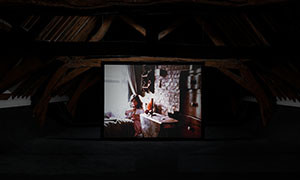
Years later, as Akerman ventured more and more into other forms of art, she created an installation version of the film, La Chambre.
Bibliography
AUBENAS, J., Hommage à Chantal Akerman, Communauté française de Belgique, Brussels, 1995.
DE DECKER, J., « Chantal Akerman : Je voudrais que mes films ne plaisent plus seulement aux critiques et aux cinéphiles », Le Soir, 14 January 1987.
KELSEY, C., « The Education of Babette Mangolte”, Interview Magazine, 30 March 2016.
KORESKY, M., “Eclipse Series 19 : Chantal Akerman in the Seventies”, Criterion, 19 January 2010.
LOAYZA, B., « Chantal Akerman, 1968-1978 : The Weight of Being”, Criterion, 23 January 2024.
MANGOLTE, B., “La Chambre 1 et 2 – Hanging Out Yonkers – Hotel Monterey – Jeanne Dielman, 23 Quai du Commerce, 1080 Bruxelles », in AKERMAN, C., PAQUOT, C., Chantal Akerman -Autoportrait en cinéaste, Cahiers du Cinéma – Centre Pompidou, Paris, 2004, pp. 174-176.
MANGOLTE, B., « Babette Mangolte », Artforum 54(5), January 2016.
MARGULIES, I., « La Chambre Akerman. The Captive as Creator », Rouge, Decembre 2006.