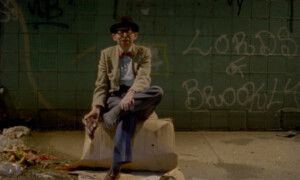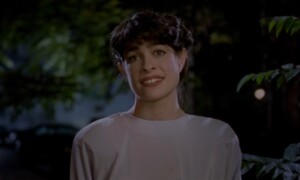
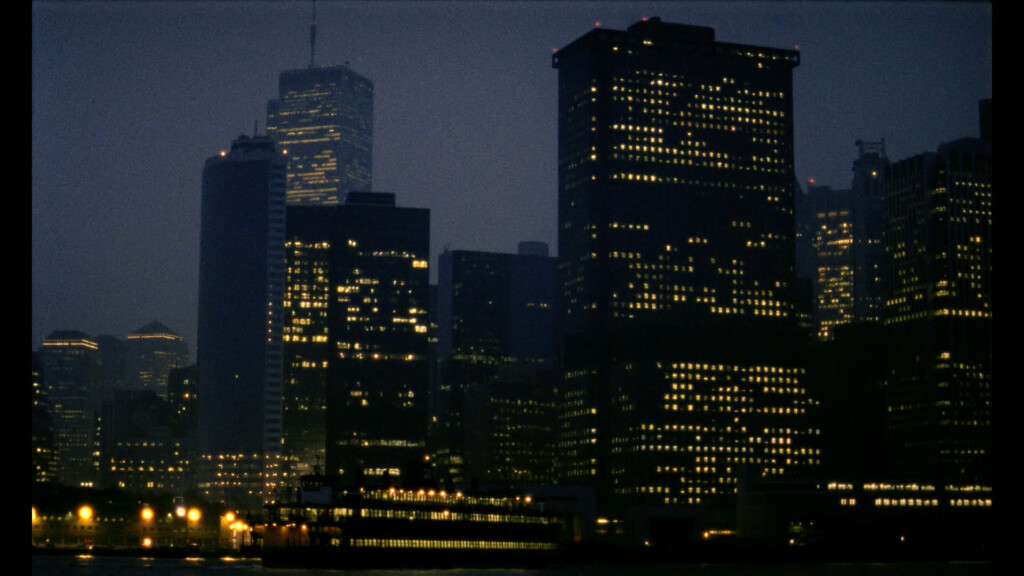
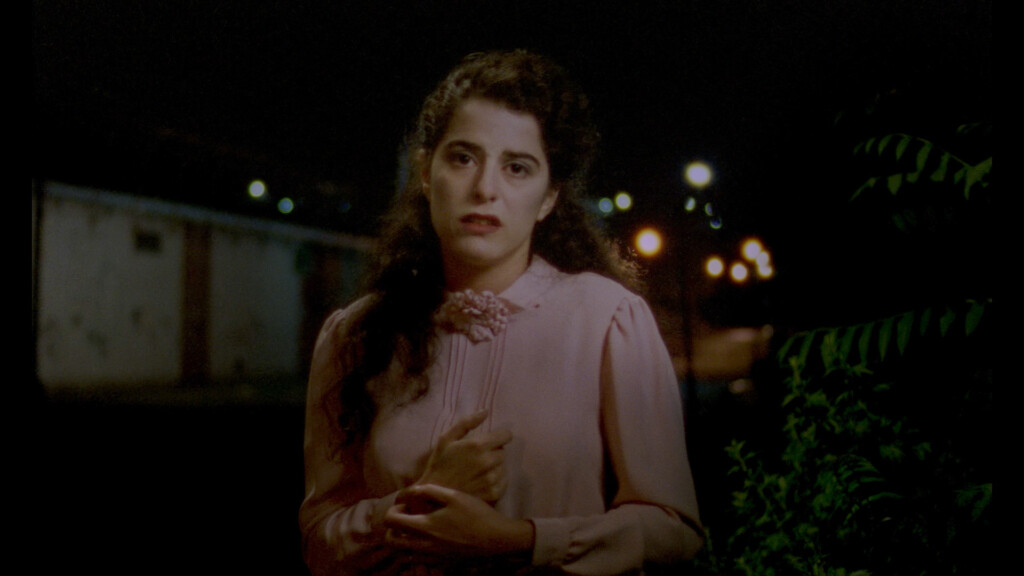
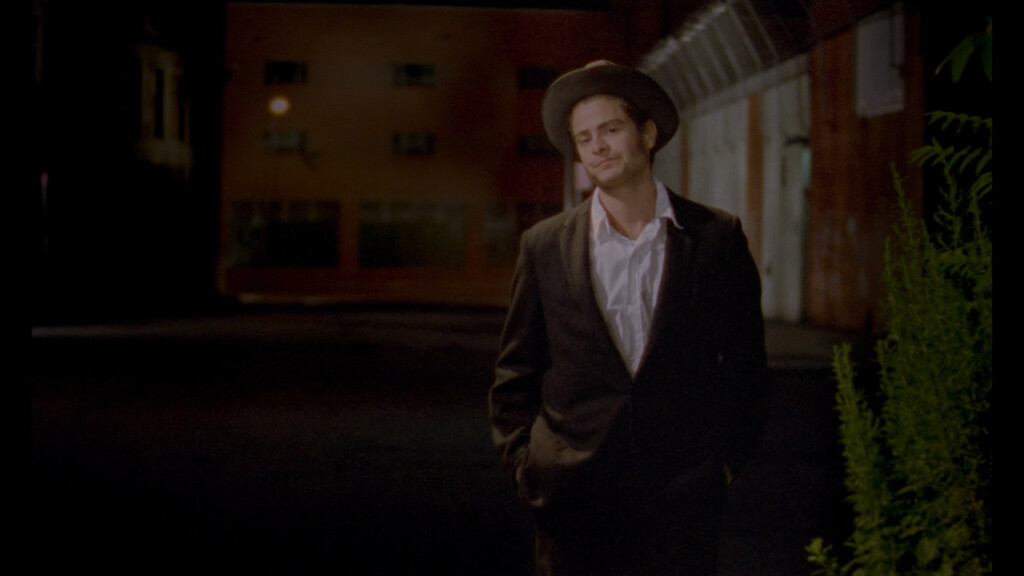
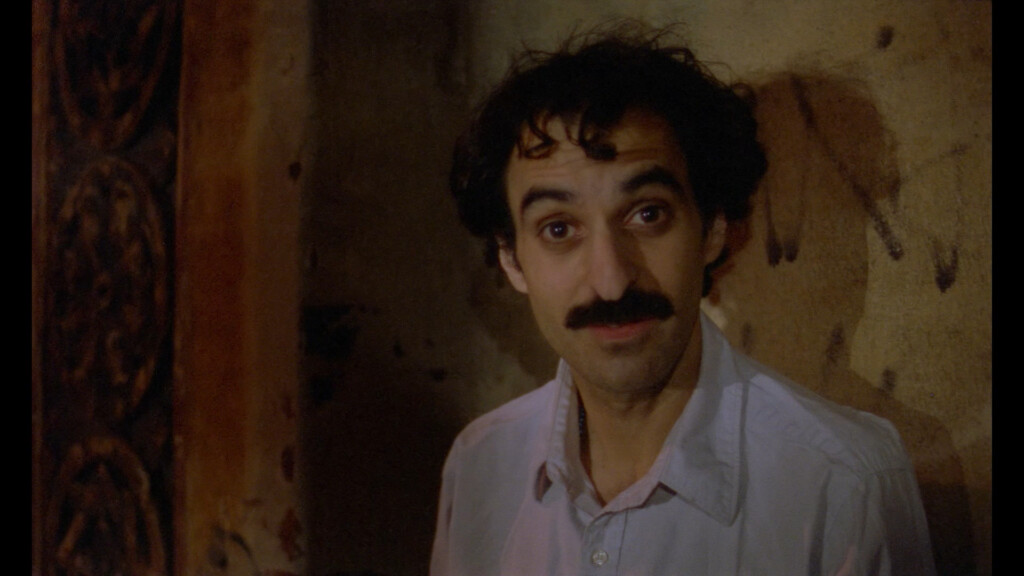
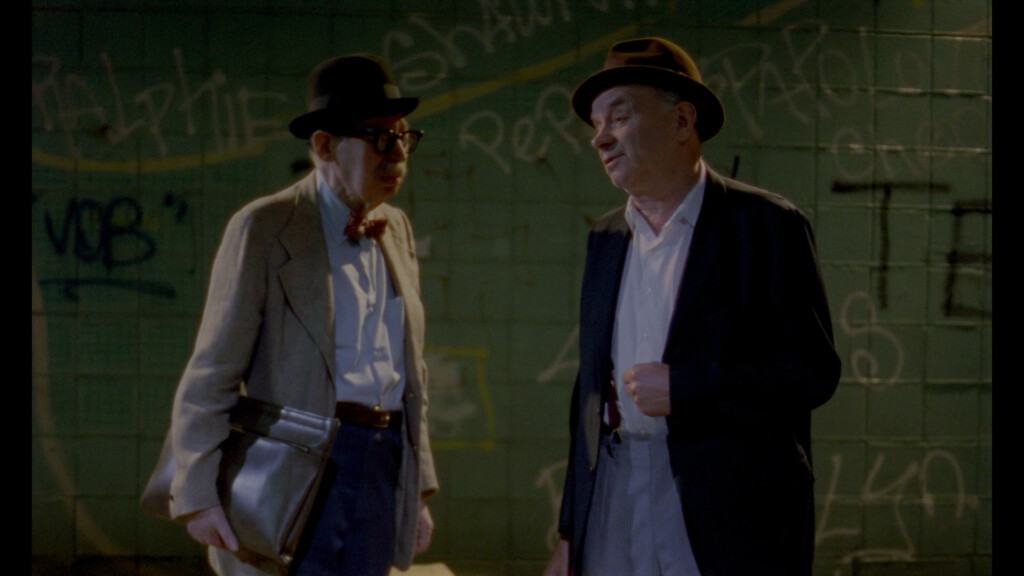
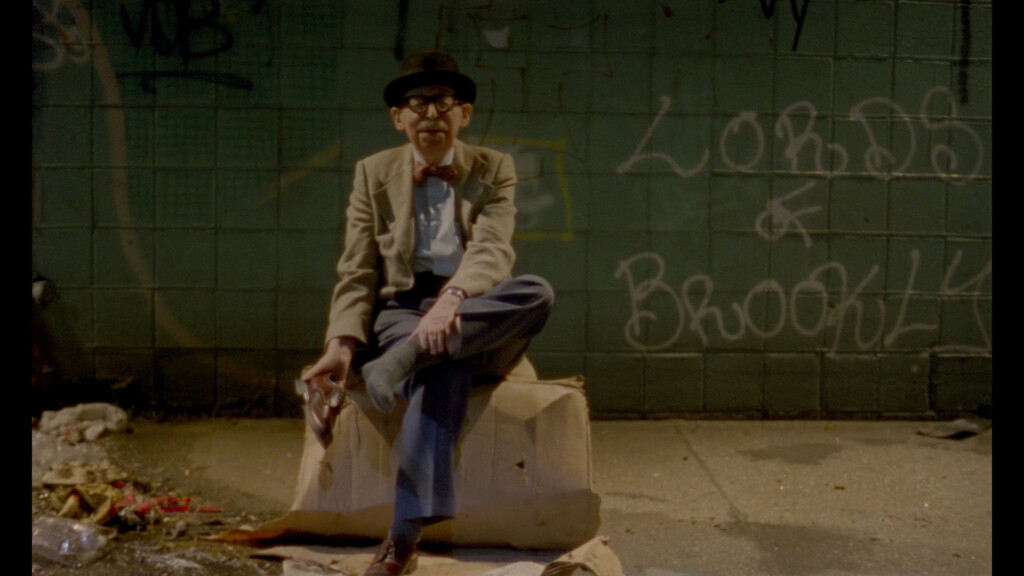
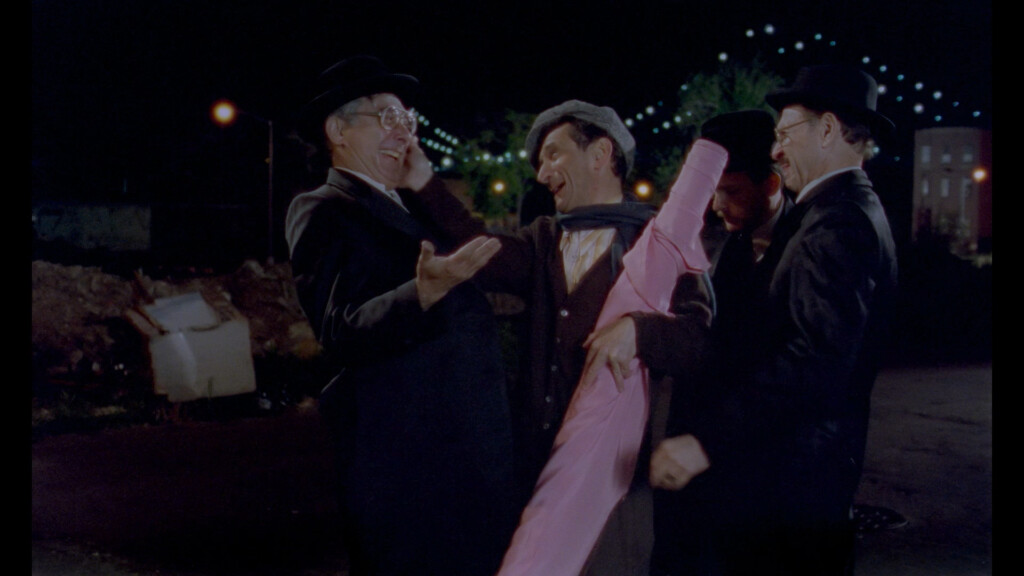
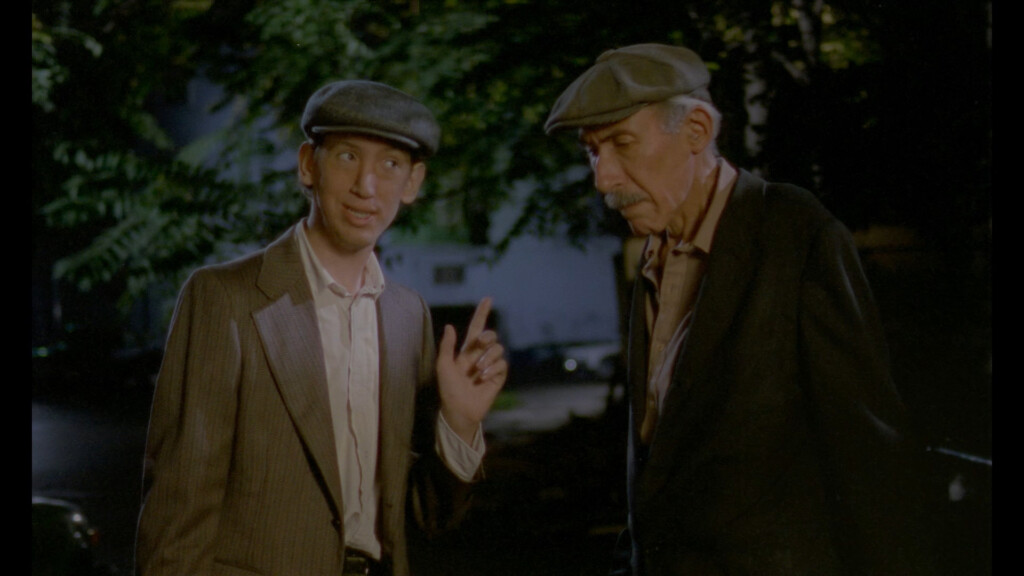
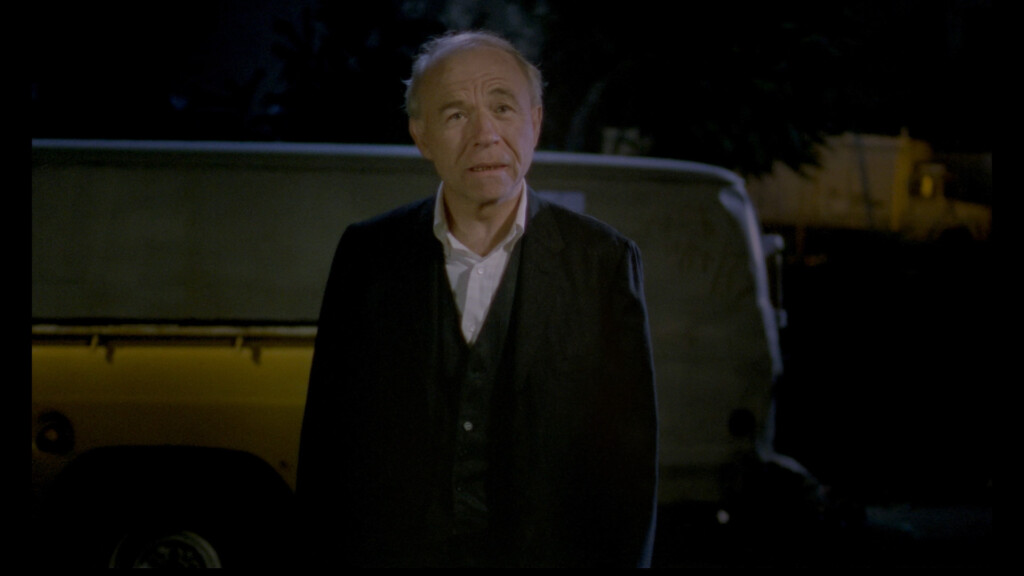
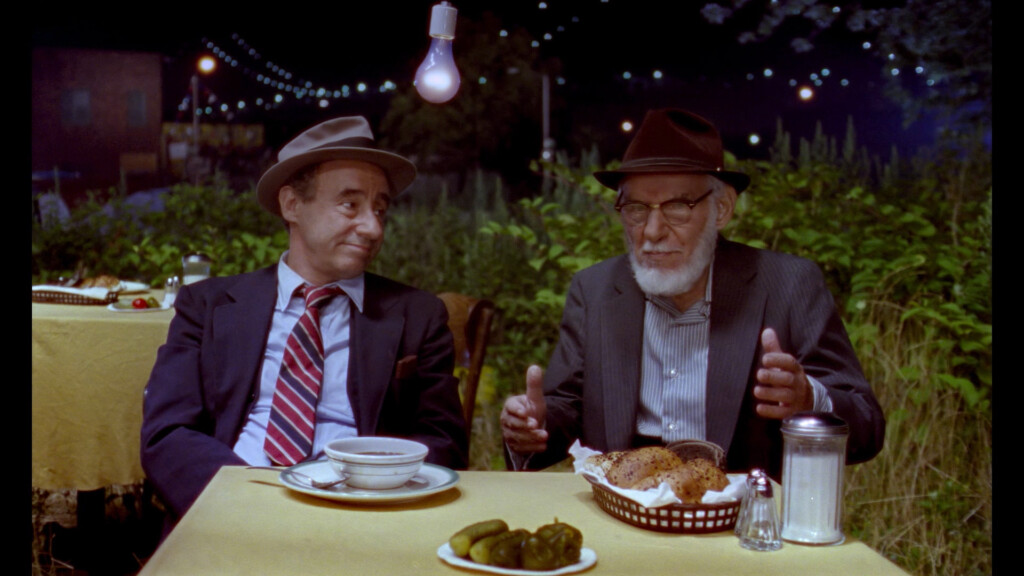
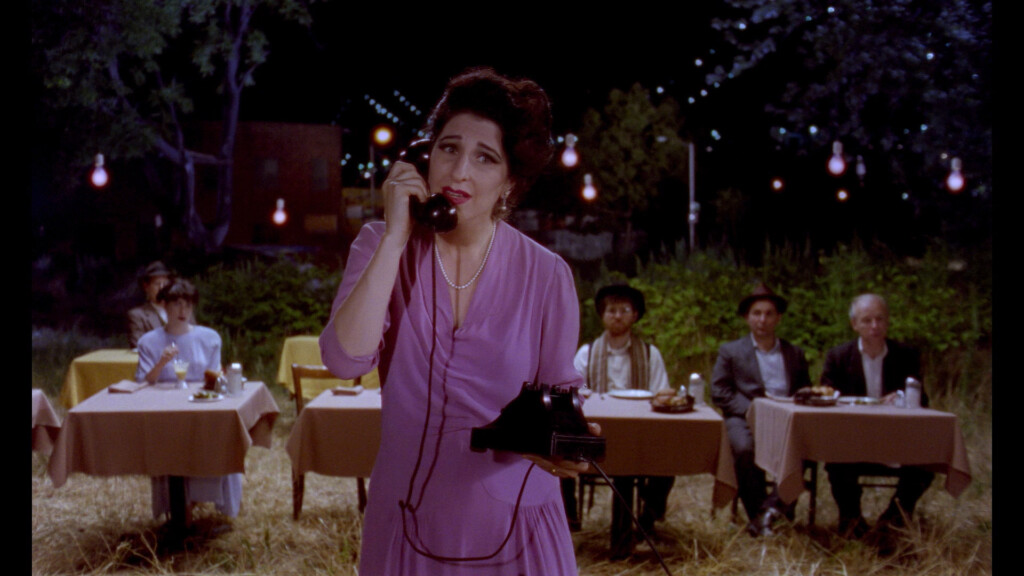
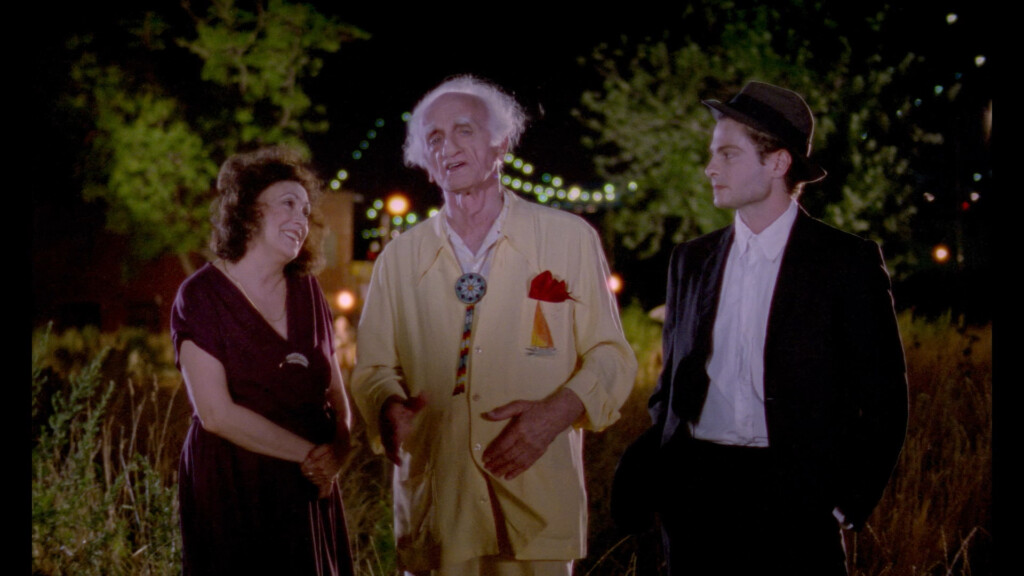
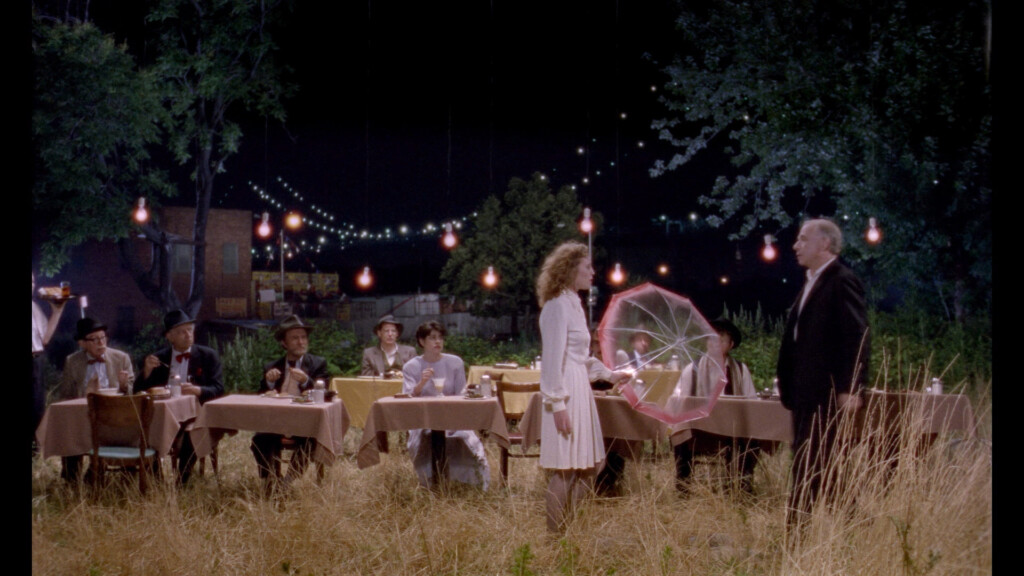
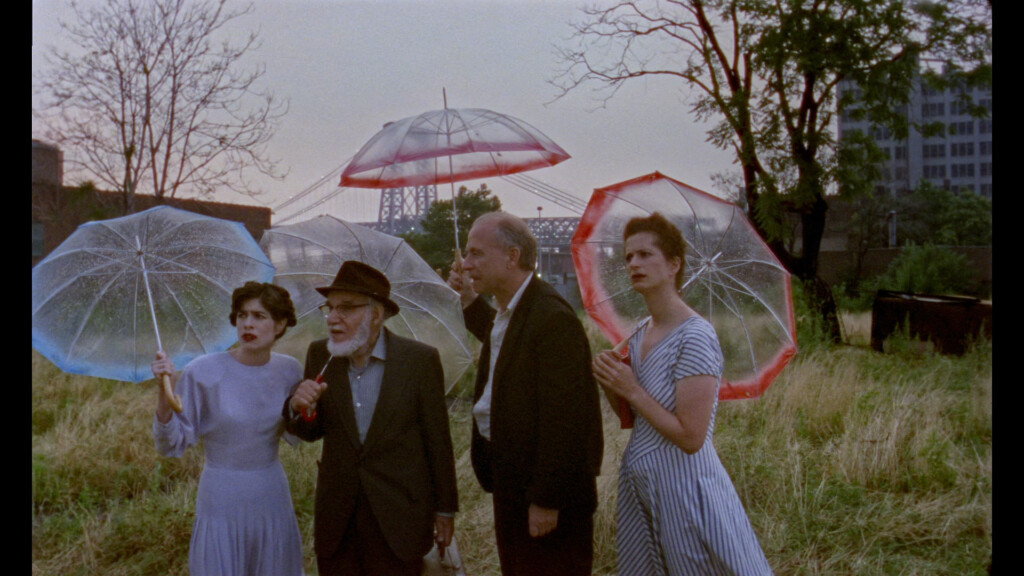
Originally, Histioires d’Amérique : Food, Family and Philosophy started as a project on Judaism and the diaspora. “Perhaps as long as fifteen years ago, even more, I wanted to do a film on the diaspora, that would have been a film that would have started in Russia, would pass through Poland and all of Eastern Europe and that would have ended around Brussels-Midi station”. Time went on and she saw an opportunity to do a movie on Judaism, in another way, by doing a project based on polish writer Isaac Bashevis Singer (1903-1991).
At first, she wanted to do a more narrative style movie, based on his two-part book, called The Manor and the Estate, published between 1953 and 1955, telling the story and tales of interconnected families of Polish Jews, during the second half of the nineteenth century. “I had bought the rights to two books by Singer called The Manor and The Estate, and those were more on the novelistic side, not like my original idea. (…) I didn’t go ahead with it. It was …) very expensive to make, I spent a few months in the United States trying to raise the money and didn’t succeed, but in I didn’t push the matter either”. At the same time, the French channel La Sept (the previous name of the French speaking part of the channel Arte), commissioned Akerman to make a documentary on Singer as well and she went back to New York to do research on him.
It was during this time that she discovered in a Yiddish newspaper, The Jewish Forward, a series of letters and columns that New York City Jews wrote. “I found, while doing my little research, some texts, that were texts that people wrote in the Jewish newspaper like people wrote to Marie-Claire to have an answer about their love problems. There, it was about all sorts of problems… (…) And I found many texts, texts that touched me, I rewrote them in my way, putting a lot of things I had heard, left and right, and then in a certain style of writing that is mine. And I mixed in some jokes, because we all know what those jewish jokes are for.” (Radio interview with Serge Dany, Microfilms, 5 octobre 1989).
But the film is not only about others and their story. It is also a story that Akerman and her family shares. “My movie is autobiographical made of imaginary memories. Me, no one told me anything when I lived with my parents…(…) I had this hole in me that I had to fill. (…) The silence around what happened to my family, chased from Poland, was becoming terrible (my greatgrandfather took 20 years to reunite his family in Belgium !). Doing the film, I felt better”. (Chantal Akerman in an interview with Le Soir, February 1989). “The exile of our parents was in a physical space; ours is internal. It was to learn about these stories and then tell them that I wanted to make the film” (Chantal Akerman in an interview with Louis Danvers).
The film’s comedians all have stories like Akerman’s, whether they’re from her parents’ generation (or older) or her own. Most of them are also prominent figures from the New York theatre scene, such as George Bartenieff (Theatre for the New City), Judith Malina (Living Theatre), and Eszter Balint (Squat Theatre). The film also features musician Roy Nathanson (The Jazz Passengers, The Lounge Lizards), who also participated in the film’s soundtrack, with Daria Hovara, Sonia Wieder-Atherton, Marc Ribot, Alexandre Zakin and Isaac Stern.
Like the name suggests, the film is composed of a patchwork of individual stories, painting a bigger story. Akerman used this style of narrative storytelling before, like with her 1982 film, Toute une nuit. According to Janet Bergstrom, this kind of structure is heavily influenced by the experimental cinema, especially the American one, that she discovered and frequented while she lived in New York in the 70s. But those isolated stories are not all that makes the movie. Slowly, the people we see keep meeting each other, and all gather up at the end of the movie. It’s also peppered with traditional Jewish jokes, music and tales. Marion Schmid sees the film as “an attempt to rescue memory, collective and personal, from effacement and annihilation and as a commitment to ensure, through art, a transmission that can no longer be guaranteed in the individual private sphere” (Marion Schmid, Chantal Akerman).
Histoires d’Amérique premiered at the 39th edition of the Berlin International Film Festival in 1989, as part of the official selection.
Bibliography
AUBENAS, J., “Histoires d’Amérique”, in THYS, M., Belgian Cinema – Le cinéma belge – de Belgische cinema, Ludion – Cinémathèque Royale de Belgique, Gand-Amsterdam – Bruxelles, 1999, p.773.
AUBENAS, J., « Entretien avec Chantal Akerman », in Dossier de Press – Histoires d’Amérique [Chantal Akerman Foundation Archives].
AUBENAS, J., Hommage à Chantal Akerman, Communauté française de Belgique, Brussels, 1995.
BERGSTROM, J., « Invented memories », in FORSTER, G.A., Identity and Memory : The films of Chantal Akerman, Flicks Books, Trowbridge, 1999, pp. 94-116.
DANEY, S., “Entretretien Radiophonique avec Serge Daney – Microfilms – 5 octobre 1989 », in BEGHIN, C., AKERMAN, C., Oeuvre écrite et parlée 1968-2015, L’Arachnéen, Paris, 2024, pp. 587-598.
DANVERS, L., « New York, la mémoire. Chantal Akerman s’est fait raconter les ‘Histoires d’Amérique », Spectacles, pp. 132-133 [no date].
FORBES, J., « Histoires d’Amérique. American Stories : Food, Family and Philosophy”, Sight and Sound presents the auteurs series : Chantal Akerman, London, 2024, p. 76 [originally published in Monthly Film Bulletin, February 1990]
GRAUMAN, B., “Memories of an Unknown Past”, The Bulletin, 9 February 1989, p. 21.
H., « L’Oncle d’Amérique de Chantal Akerman », Le Soir, 16 February 1989.
HONOREZ, L., « C’est De l’autre côté de l’Océan que Chantal Akerman a retrouvé ses racines », Le Soir, 25 August 1988.
LEFORT, G., “Nos oncles d’Amérique”, Libération, 16 February 1989, p. 41.
LOUIS, Th., « Chantal Akerman dans les pas de Singer », La Libre Belgique, 20 March 1989
METZKER, I., A Bintel Brief. Sixty Years of Letters From the Lower East Side to the Jewish Daily Forward, Schoken, New York, 1990.
ROBERTS, A., “Laugh or Cry : Jewish Humour in Chantal Akerman’s Histoires d’Amérique”, ICA, 22 October 2014.
s.n., « ‘Oui, « Histoires d’Amérique » est un voyage vers mes racines’, nous confie Chantal Akerman », Le Peuple, 18 January 1989.
SCHMID, M., Chantal Akerman, Manchester University Press, Manchester, 2010.